
 By
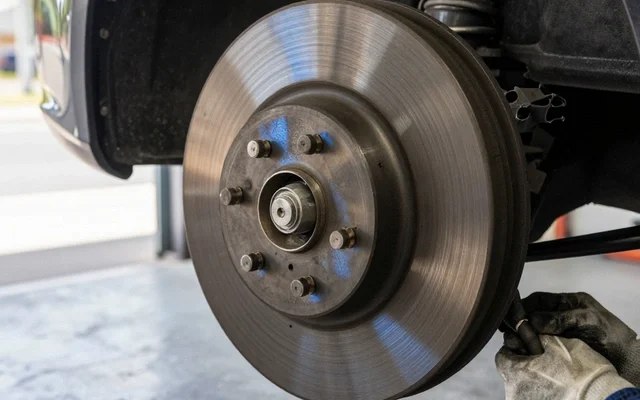
The braking system is arguably the most critical safety component of any vehicle. At the center of this system sits the brake rotor, a circular disc that rotates with the wheel. When a driver presses the brake pedal, hydraulic pressure forces brake pads against the surface of these rotors, creating friction. This friction is what slows and eventually stops the vehicle. However, the laws of physics dictate that the kinetic energy of the moving vehicle cannot simply disappear; it must be converted into another form of energy. In the case of braking, that energy becomes heat. The ability of a rotor to manage, dissipate, and survive this heat is determined almost entirely by its material composition and design.
The Physics of Thermal Management in Braking
To understand why material choice matters, one must first understand the thermal challenges rotors face. During a high-speed stop, a brake rotor can reach temperatures exceeding 1,000 degrees Fahrenheit. If the heat is not dissipated quickly enough, the braking system experiences a phenomenon known as brake fade. Fade occurs when the friction material of the pads becomes too hot to maintain a grip on the rotor, or in extreme cases, when the brake fluid boils.
Efficient heat dissipation relies on three primary mechanisms: conduction, convection, and radiation. Conduction involves the heat moving through the rotor material itself. Convection is the transfer of heat from the rotor surface to the surrounding air. Radiation is the emission of energy as electromagnetic waves. A superior brake rotor material must have high thermal conductivity to move heat away from the contact patch and high thermal capacity to absorb energy without structural failure.
Cast Iron: The Industry Standard
For the vast majority of passenger vehicles on the road today, gray cast iron remains the material of choice. This is not merely a matter of cost, though iron is significantly cheaper to produce than exotic composites. Gray iron possesses a unique internal structure that makes it exceptionally well-suited for friction applications.
The secret lies in the graphite flakes embedded within the iron matrix. These flakes provide several advantages:
-
Thermal Conductivity: Graphite is an excellent conductor of heat, allowing the rotor to distribute thermal energy evenly across its mass, which reduces the risk of localized “hot spots.”
-
Damping Capacity: Cast iron is highly effective at absorbing vibrations, which helps minimize brake squeal and chatter.
-
Wear Resistance: The carbon content in gray iron provides a degree of self-lubrication that, while still allowing for high friction, prevents the rotor from wearing down too quickly under normal driving conditions.
However, cast iron is heavy. This increases unsprung weight, which can negatively affect a vehicle’s handling and fuel efficiency. It is also prone to oxidation or rusting, particularly in humid or coastal environments.
Steel Rotors: Strength and Lightweight Performance
While cast iron dominates the automotive market, steel rotors are the standard in the motorcycle industry and certain specialized racing applications. Steel has a higher tensile strength than cast iron, which allows manufacturers to make rotors much thinner and lighter.
In motorcycles, where weight and space are at a premium, stainless steel rotors are preferred because they resist corrosion and can withstand the mechanical stress of being clamped by powerful calipers despite their thin profile. However, steel does not manage heat as effectively as cast iron. Steel rotors have lower thermal conductivity, meaning they are more prone to warping if subjected to the sustained, heavy loads seen in heavy passenger cars or trucks.
High-Performance Carbon Ceramics
At the pinnacle of braking technology are carbon-ceramic rotors. These are typically reserved for supercars, high-end sports cars, and professional racing vehicles. Unlike metallic rotors, these are made from a composite of carbon fibers and silicon carbide.
The advantages of carbon ceramic are transformative:
-
Extreme Heat Resistance: Carbon ceramics can operate at temperatures that would cause a cast iron rotor to glow cherry red and eventually melt. They are virtually immune to thermal warping.
-
Weight Reduction: A carbon-ceramic rotor can be up to 50 percent lighter than an iron rotor of the same size. This massive reduction in unsprung mass improves steering response and suspension performance.
-
Longevity: Under normal street driving, carbon-ceramic rotors can last the entire lifetime of the vehicle. They do not rust and exhibit minimal surface wear.
The primary drawback is cost. A single set of carbon-ceramic brakes can cost as much as a small economy car. Furthermore, they can be less effective than iron rotors when they are cold, often requiring a bit of “warm-up” before they reach their peak stopping power.
Surface Treatments and Heat Dissipation Enhancements
Beyond the base material, engineers use various physical modifications to improve a rotor’s ability to shed heat.
Venting and Vaning
Most front-wheel rotors are “vented,” meaning they consist of two friction surfaces separated by internal fins or vanes. As the rotor spins, these vanes act like a centrifugal fan, pulling cool air from the center and pumping it outward through the rotor. Advanced designs use directional or curved vanes that are optimized for the airflow patterns of a specific vehicle.
Cross-Drilling and Slotting
-
Cross-Drilled Rotors: Holes are drilled through the friction surface to increase the total surface area exposed to air and to provide an escape path for gases and water. While visually striking, drilling can create stress risers that lead to cracking under extreme track use.
-
Slotted Rotors: Shallow grooves are machined into the surface. These slots help “wipe” the brake pad clean of debris and deglaze the pad surface. Slotting is generally preferred over drilling for heavy-duty or racing applications because it maintains more of the rotor’s structural integrity.
The Role of Cryogenic Treatment
In the pursuit of even greater durability, some high-performance iron rotors undergo cryogenic treatment. This process involves slowly cooling the rotors to temperatures below minus 300 degrees Fahrenheit and then gradually bringing them back to room temperature. This deep-freezing process rearranges the molecular structure of the iron, creating a more uniform and dense grain. The result is a rotor that is significantly more resistant to heat checking and warping, making it a popular choice for fleet vehicles and amateur racers.
Frequently Asked Questions
Why do some rotors have a hat made of aluminum while the disc is iron?
These are known as two-piece or floating rotors. The aluminum center (the hat) reduces weight and acts as a thermal barrier, preventing heat from transferring from the braking surface to the wheel bearings and hub.
Can I switch from iron rotors to carbon-ceramic rotors on any car?
Technically, it is possible if a conversion kit exists, but it is rarely practical. Aside from the extreme cost, carbon-ceramic rotors require specific brake pad compounds and often different caliper clearances to function correctly.
Does a larger rotor always mean better stopping power?
Not necessarily. A larger rotor provides a larger leverage arm and more surface area for heat dissipation, which helps prevent fade. However, the actual stopping distance is usually limited by the grip of the tires and the calibration of the ABS system.
What is “heat checking” on a brake rotor?
Heat checking appears as small, hairline cracks on the surface of the rotor. These are caused by the rapid expansion and contraction of the metal during extreme heat cycles. While small checks are common in racing, deep cracks are a sign that the rotor must be replaced immediately.
Why are rear rotors often solid while front rotors are vented?
During braking, weight shifts to the front of the vehicle. The front brakes typically do 60 to 80 percent of the work. Because the rear brakes handle significantly less load, they generate less heat and can often be kept cool enough with simpler, solid discs.
How does rust on the rotor surface affect heat dissipation?
Surface rust on the friction area is usually scrubbed off the first time you use the brakes. However, heavy rust inside the cooling vanes of a vented rotor can act as an insulator and restrict airflow, significantly reducing the rotor’s ability to cool itself.
What is the “bedding-in” process for new rotors?
Bedding-in involves a series of controlled stops that transfer a thin, even layer of brake pad material onto the rotor surface. This “transfer layer” is essential for optimal friction and helps prevent uneven heat buildup that can lead to pedal pulsation.









Comments