
 By

In an era where environmental consciousness and economic efficiency intersect, eco-driving has emerged as a vital skill for modern motorists. While most people associate eco-driving primarily with saving fuel and reducing carbon emissions, its benefits extend far beyond the gas pump. Adopting a sustainable driving style significantly reduces the physical strain on a vehicle’s mechanical systems. By understanding and implementing specific eco-driving techniques, drivers can substantially extend the lifespan of critical components such as the engine, transmission, braking system, and tires. This proactive approach to vehicle operation leads to lower maintenance costs and a higher resale value over time.
The Philosophy of Smooth Operation
The core tenet of eco-driving is smoothness. Violent changes in speed and direction create high-stress loads on every part of the vehicle. When a driver practices smooth acceleration and deceleration, they are practicing mechanical sympathy. This mindset acknowledges that every moving part has a finite life, and its longevity is directly proportional to the stress it endures.
Mechanical components are designed to operate within certain tolerances. Pushing these components to their limits through aggressive driving causes heat buildup and friction, the two primary enemies of automotive longevity. Eco-driving seeks to minimize these factors, keeping the vehicle in its most efficient and least stressed operating state.
Strategic Acceleration and Engine Preservation
The engine is the heart of the vehicle and often the most expensive component to repair or replace. Aggressive acceleration is not only fuel-inefficient but also subjects the engine to extreme internal pressures and temperatures.
-
Progressive Throttling: Instead of “flooring it” to reach cruising speed, eco-driving involves gradual pressure on the accelerator. This allows the fuel injection system to optimize the air-fuel mixture and prevents the sudden spikes in cylinder pressure that can wear out piston rings and bearings prematurely.
-
Optimal Shift Points: For those driving manual transmissions, shifting up early—generally before the engine reaches 2,500 RPM—keeps the engine from working too hard. In automatic vehicles, a light foot encourages the transmission to shift into higher gears sooner, reducing the total number of engine revolutions over the life of the car.
-
Warm-Up Myths: Modern fuel-injected engines do not need to idle for long periods to warm up. In fact, prolonged idling can cause incomplete combustion and oil dilution. The best way to warm up a car is to drive it gently immediately after starting, allowing all components to reach operating temperature simultaneously.
Predictive Braking and Kinetic Energy Management
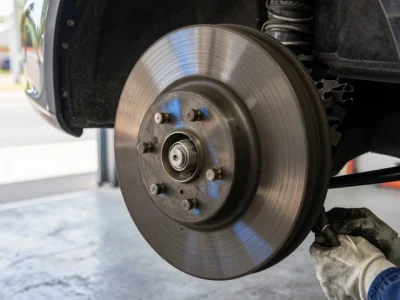
Braking systems are designed to convert kinetic energy into heat through friction. Frequent, heavy braking accelerates the wear on brake pads, rotors, and calipers. Eco-driving focuses on “reading the road” to minimize the need for friction braking.
By looking far ahead and anticipating traffic flow, a driver can often slow down simply by lifting their foot off the accelerator. This is known as engine braking or coasting in gear. In this state, the vehicle’s momentum turns the engine, and modern cars cut off fuel delivery entirely. Not only does this save fuel, but it also reduces the heat cycles that brake rotors undergo, preventing warping and extending the intervals between brake services.
Furthermore, keeping a safe following distance is a fundamental eco-driving habit. It provides a buffer that allows the driver to adjust speed using the throttle rather than constant stabs at the brake pedal, which preserves the integrity of the hydraulic system and the brake hardware.
Protecting the Transmission and Drivetrain
The transmission is responsible for transferring power from the engine to the wheels. It is a complex assembly of gears, clutches, and sensors that are sensitive to heat and sudden torque loads.
Eco-driving promotes longevity in the drivetrain by avoiding “jackrabbit” starts. When a vehicle is forced to accelerate rapidly from a standstill, the transmission experiences a massive surge in torque. This can cause wear on the clutch plates in a manual or dual-clutch transmission and strain the torque converter and planetary gears in a traditional automatic.
Maintaining a steady speed using cruise control on flat highways also benefits the transmission. Frequent downshifting caused by minor speed fluctuations increases the wear on shift solenoids and internal friction materials. By maintaining a constant velocity, the transmission stays in its highest gear, reducing internal friction and heat.
Tire Conservation Through Cornering and Load Management
Tires are the only point of contact between the vehicle and the road. They are subject to wear from friction, heat, and lateral forces. Eco-driving techniques are remarkably effective at doubling or even tripling the mileage one can get from a set of tires.
-
Gentle Cornering: Taking turns at high speeds increases lateral scrub, which peels away the tread on the edges of the tires. Slowing down before a turn and accelerating gently out of it ensures even tread wear and reduces the strain on suspension components like bushings and ball joints.
-
Maintaining Correct Pressure: While not a “driving” technique per se, keeping tires at the manufacturer’s recommended pressure is essential for eco-driving. Under-inflated tires have a higher rolling resistance, which forces the engine to work harder and causes the tire to flex excessively, generating heat that can lead to structural failure.
-
Weight Reduction: Carrying unnecessary weight in the trunk or roof rack increases the load on the tires and suspension. Removing unused items reduces the energy required to move the vehicle and lessens the downward force on the tires, preserving their shape and tread life.
Aerodynamics and Cooling System Longevity
At higher speeds, aerodynamic drag becomes the primary obstacle to efficiency. Driving at 65 mph instead of 75 mph significantly reduces the force the car must push against. This lower resistance means the engine does not have to produce as much power, which in turn reduces the heat generated.
A cooler-running engine puts less stress on the cooling system. Radiators, water pumps, and hoses are all subject to degradation from high pressure and extreme temperature swings. By driving at more moderate, consistent speeds, the cooling system operates within its most efficient range, reducing the likelihood of leaks or pump failure over the long term.
Frequently Asked Questions
Does eco-driving cause carbon buildup in the engine since it isn’t being pushed hard?
While older engines occasionally needed a “highway blast” to clear deposits, modern engines with sophisticated sensors and high-quality fuels are designed to run cleanly at low RPMs. As long as the vehicle occasionally reaches full operating temperature during a drive, eco-driving will not cause significant carbon buildup.
Is coasting in neutral more efficient than coasting in gear?
In modern fuel-injected vehicles, coasting in gear is actually more efficient and better for the car. When in gear with your foot off the gas, the engine uses zero fuel. In neutral, the engine must consume fuel to maintain an idle. Additionally, coasting in gear provides better control and keeps the oil pump spinning at a higher rate.
How does eco-driving affect the battery and alternator in modern cars?
Eco-driving is generally neutral for these components, but many modern cars have “smart” charging systems that charge the battery primarily when the car is decelerating or coasting. By using predictive braking and coasting more often, you actually assist these systems in keeping the battery topped off without extra engine load.
Can eco-driving habits damage a turbocharger?
Quite the opposite. Turbochargers are highly sensitive to heat. Aggressive driving spikes exhaust gas temperatures, which can “cook” the oil inside a turbo if the engine is shut off shortly after. Eco-driving keeps these temperatures lower, which is significantly better for the longevity of the turbo’s bearings and seals.
Does using cruise control always count as eco-driving?
Cruise control is excellent for eco-driving on flat or slightly rolling terrain because it maintains a steady throttle. However, in very mountainous areas, cruise control can be inefficient because it may downshift aggressively to maintain a specific speed on a steep climb. In those cases, manual throttle control is often better.
Will eco-driving help with the longevity of a hybrid or electric vehicle (EV) battery?
Yes. In hybrids and EVs, eco-driving maximizes regenerative braking, which captures energy rather than wasting it as heat. Furthermore, avoiding “flooring” an EV reduces the high-current draw from the battery cells, which can help minimize heat-related degradation over many years of use.
Does carrying a roof rack affect mechanical components other than just fuel?
Yes, a roof rack increases aerodynamic drag, which means the engine and transmission must work harder to maintain the same speed. Over thousands of miles, this constant extra “pull” increases the cumulative wear on the drivetrain compared to a vehicle with a clean aerodynamic profile.







Comments